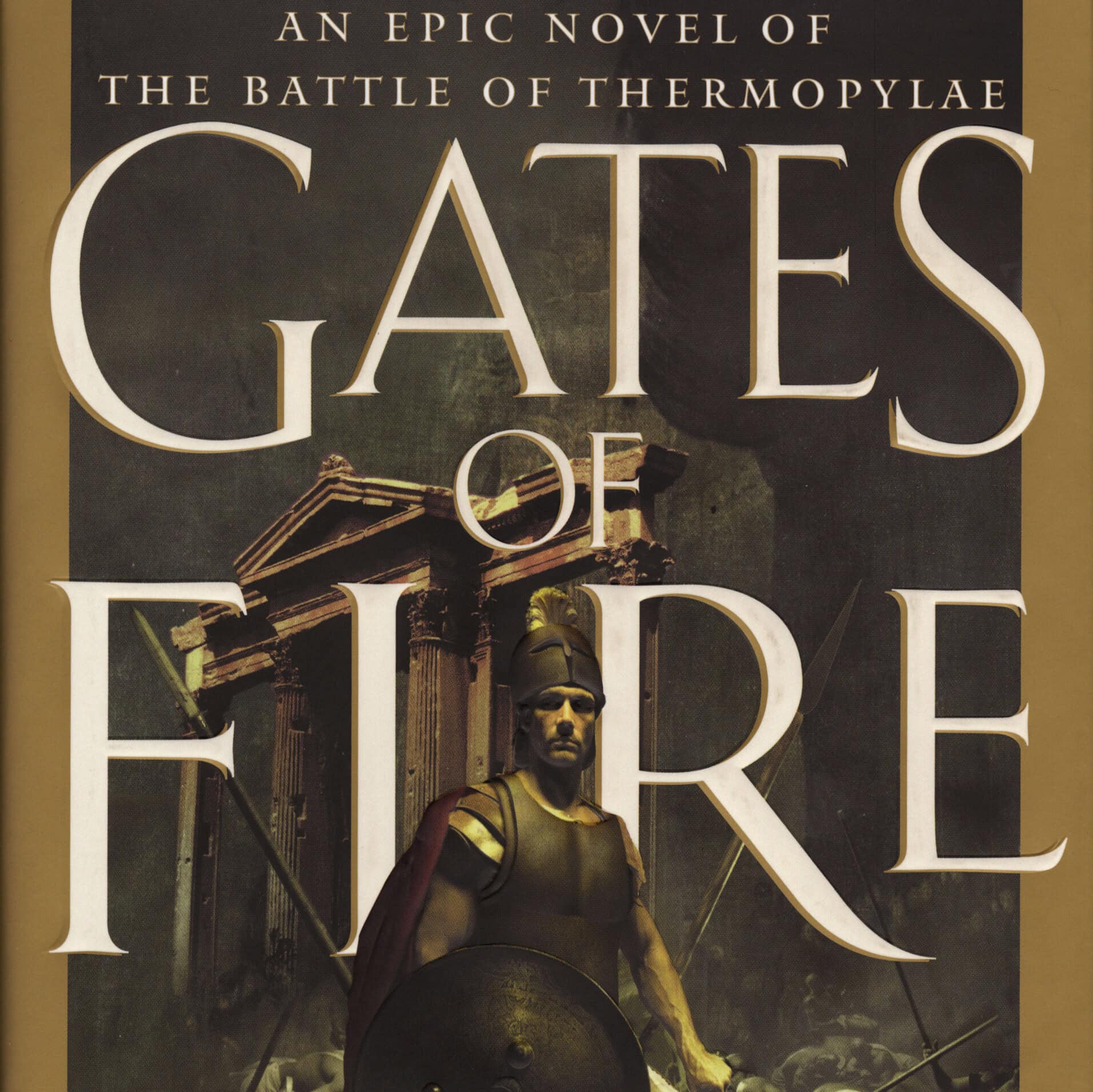
The novel Gates of Fire is a fictionalized retelling of the Battle of Thermopylae (480 BC) where 300 Spartans and their allies made a legendary stand against the massive Persian army of King Xerxes.
The story is narrated by Xeones, a Greek survivor who becomes a squire to the Spartans, and after their defeat is taken captive by the Persians. With his captors as an audience, he recounts the tale of the Spartans’ preparations, their culture, and the battle itself. Through his life’s journey, the reader learns of not just King Leonidas and Xerxes, but also of ordinary soldiers, their lives, family, and the community and culture that created faithful warriors willing to make the ultimate sacrifice to protect their polis.
I might recommend this book to my boys as older teenagers. Its content is mature as war is a central plot point, and there is frank, but not graphic, discussion of themes such as marital customs and brothels and prostitution. But there is great value in the ethos of honor, duty, and courage in the face of terror.
I particularly like the prominent role women played in the text. As King Leonidas must select the 300 Spartans who will march with him to Thermopylae, he does not simply pick the strongest or most capable warriors. He deliberately selects men based on the strength of their wives and mothers. His reasoning is that this is a suicide mission wherein nearly all will die. The widows and mothers will be left behind in Sparta to support their families and carry on. The entire city will have its morale shaped by how these women handle and bear their loss. Therefore, only the strongest, most steadfast, and proud women will have their spouses and sons sent into battle so that they may set an example for the polis. They will keep Sparta unified rather than broken by grief.
The narrator Xeones is a archetype for the power of fate or destiny. As a boy, his city is destroyed, his family slaughtered, and he survives almost by accident, suggesting he is spared by fate. His youth is marked by exile and hardship, shaping him for the path that leads to Sparta. Though not Spartan by birth, his life bends toward serving them, as though destiny placed him in their orbit to record their story. At Thermopylae, almost all die — but Xeones survives, grievously wounded, to be taken before Xerxes. This survival isn’t luck; it feels fated, so that he can bear witness.
Here are the key themes:
1. Honor and Sacrifice
The Spartans’ readiness to die for their city and comrades is central. Their deaths are not seen as tragedy alone, but as the ultimate fulfillment of their duty. Leonidas in particular embodies the ideal of leadership by sacrifice.
2. Courage and Fear
Pressfield portrays courage not as the absence of fear, but as action in spite of it. Characters openly discuss terror, pain, and doubt yet still choose to fight.
3. Discipline and Training
Spartan society is depicted as harsh, raising children from youth to withstand hardship. The agoge (training system) forms warriors who value the group above the self. This relentless preparation is shown as the source of their battlefield prowess.
4. Comradeship and Brotherhood
The bond among the warriors is a constant theme. Loyalty to one another is as important as loyalty to the state. Pressfield highlights the love and trust between soldiers as the glue that holds the phalanx together.
5. The Role of Women
Though Sparta was male-dominated, Spartan women play a vital role. They are portrayed as strong, proud, and often sterner than the men. They remind the warriors that their deaths would bring honor, not shame, to their families.
6. Leadership
King Leonidas represents the ideal leader: he leads by example, shares the hardships of his men, and embraces sacrifice. His decisions emphasize that leadership is service, not privilege.
7. The Nature of War
The book doesn’t romanticize combat—it shows its horror, blood, and exhaustion. Yet it also depicts war as a crucible that reveals character and values.
Leave a Reply