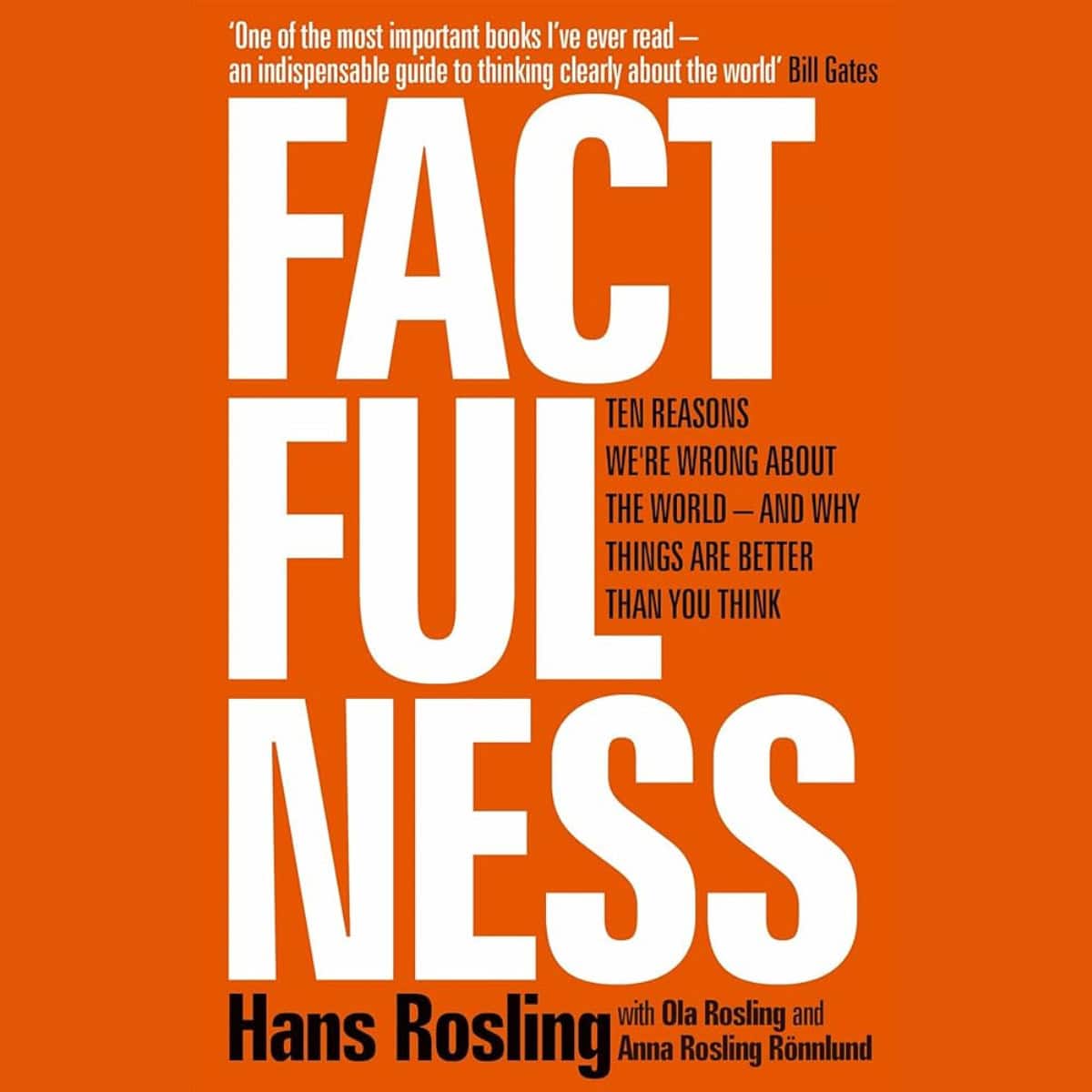
The problem with an accurate understanding of the world is twofold: (1) we are subject to numerous perceptual and reasoning biases and (2) we rarely update outdated and stale facts about the world. Hans Rosling’s Factfulness: Ten Reasons We’re Wrong About the World—and Why Things Are Better Than You Think (2018) is a book about how humans systematically misperceive global realities, and how to adopt a fact-based worldview.
Just like humans are susceptible to optical illusions Hans lays out the cognitive traps of misperception and why we hold grossly inaccurate mental maps of reality. He lays out ten instincts that often lead us astray as we try to make sense of the world.
The Ten Instincts
- Gap Instinct – Seeing the world as divided into “rich vs poor” instead of a continuum.
- Negativity Instinct – Paying more attention to bad news than good progress.
- Straight Line Instinct – Assuming trends (like population growth) continue forever in a straight line.
- Fear Instinct – Letting frightening events (terrorism, accidents, disasters) dominate our perception.
- Size Instinct – Misjudging numbers without proper proportion (e.g., deaths from terrorism vs heart disease).
- Generalization Instinct – Assuming groups are more uniform than they are.
- Destiny Instinct – Believing that cultures or countries are fixed and unchangeable.
- Single Perspective Instinct – Relying on one lens (ideology, profession, worldview) to explain everything.
- Blame Instinct – Looking for villains or heroes instead of complex systems and causes.
- Urgency Instinct – Feeling compelled to act immediately, which can lead to hasty, bad decisions.
Cumulatively, these instincts lead us away from critical, fact-based reasoning and toward emotionally driven caricatures of things as they really are. The key lesson is that the majority of humanity lives in the “middle,” in neither extreme wealth nor extreme poverty. Globally, poverty, child mortality, and illiteracy have fallen steeply; while life expectancy and education have dramatically risen. The media (24-hr news stations and legacy papers) abuse human psychology to overemphasize conflict and crisis. They sell catastrophe and wildly understate progress. By using data, skepticism, and proportionate thinking, we can make better policy and business decisions as we engage the world on a foundation of facts.
Leave a Reply