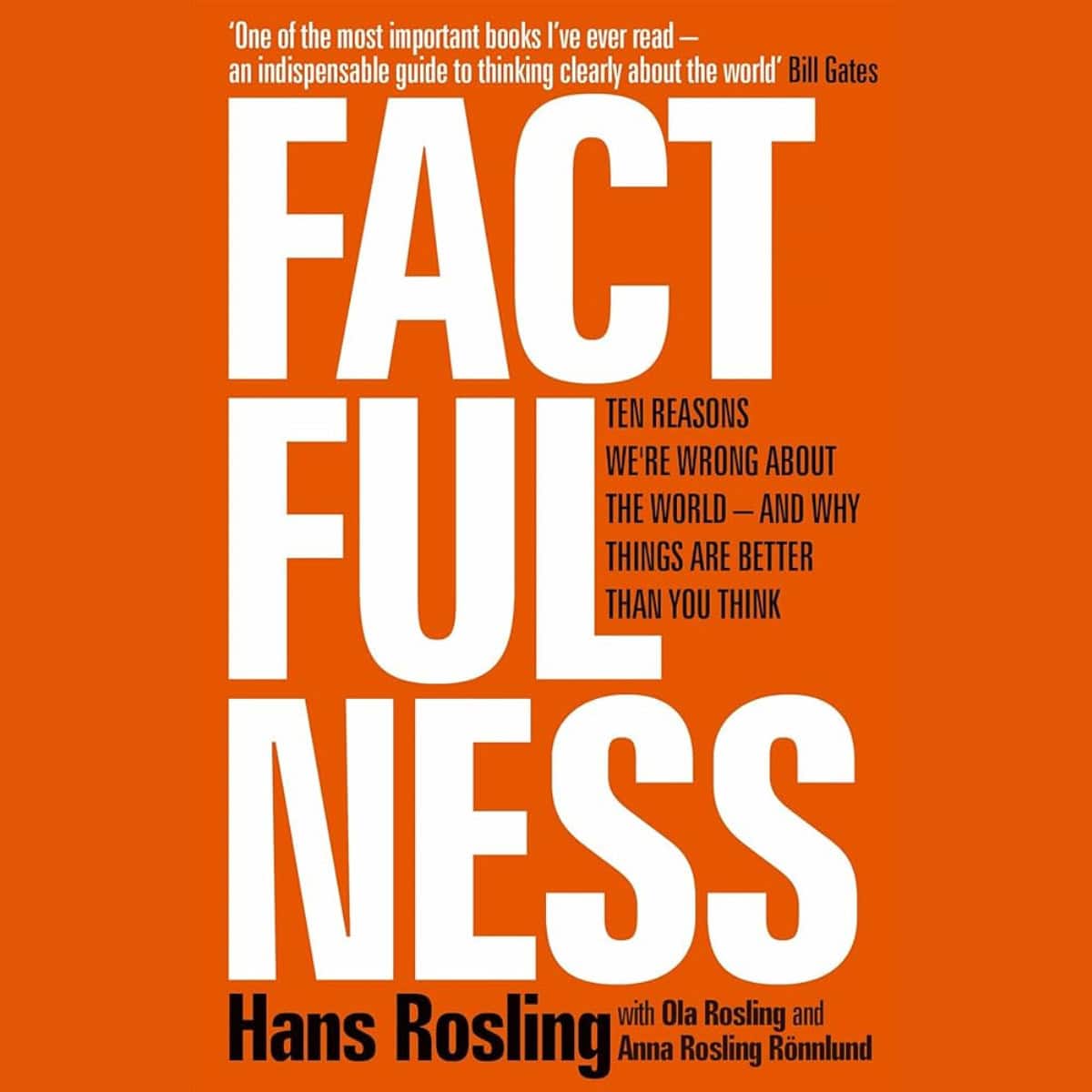
The problem with an accurate understanding of the world is twofold: (1) we are subject to numerous perceptual and reasoning biases and (2) we rarely update outdated and stale facts about the world. Hans Rosling’s Factfulness: Ten Reasons We’re Wrong About the World—and Why Things Are Better Than You Think (2018) is a book about how humans systematically misperceive global realities, and how to adopt a fact-based worldview.
Just like humans are susceptible to optical illusions Hans lays out the cognitive traps of misperception and why we hold grossly inaccurate mental maps of reality. He lays out ten instincts that often lead us astray as we try to make sense of the world.
The Ten Instincts
Gap Instinct – Seeing the world as divided into “rich vs poor” instead of a continuum.
Negativity Instinct – Paying more attention to bad news than good progress.
Straight Line Instinct – Assuming trends (like population growth) continue forever in a straight line.
Size Instinct – Misjudging numbers without proper proportion (e.g., deaths from terrorism vs heart disease).
Generalization Instinct – Assuming groups are more uniform than they are.
Destiny Instinct – Believing that cultures or countries are fixed and unchangeable.
Single Perspective Instinct – Relying on one lens (ideology, profession, worldview) to explain everything.
Blame Instinct – Looking for villains or heroes instead of complex systems and causes.
Urgency Instinct – Feeling compelled to act immediately, which can lead to hasty, bad decisions.
Cumulatively, these instincts lead us away from critical, fact-based reasoning and toward emotionally driven caricatures of things as they really are. The key lesson is that the majority of humanity lives in the “middle,” in neither extreme wealth nor extreme poverty. Globally, poverty, child mortality, and illiteracy have fallen steeply; while life expectancy and education have dramatically risen. The media (24-hr news stations and legacy papers) abuse human psychology to overemphasize conflict and crisis. They sell catastrophe and wildly understate progress. By using data, skepticism, and proportionate thinking, we can make better policy and business decisions as we engage the world on a foundation of facts.
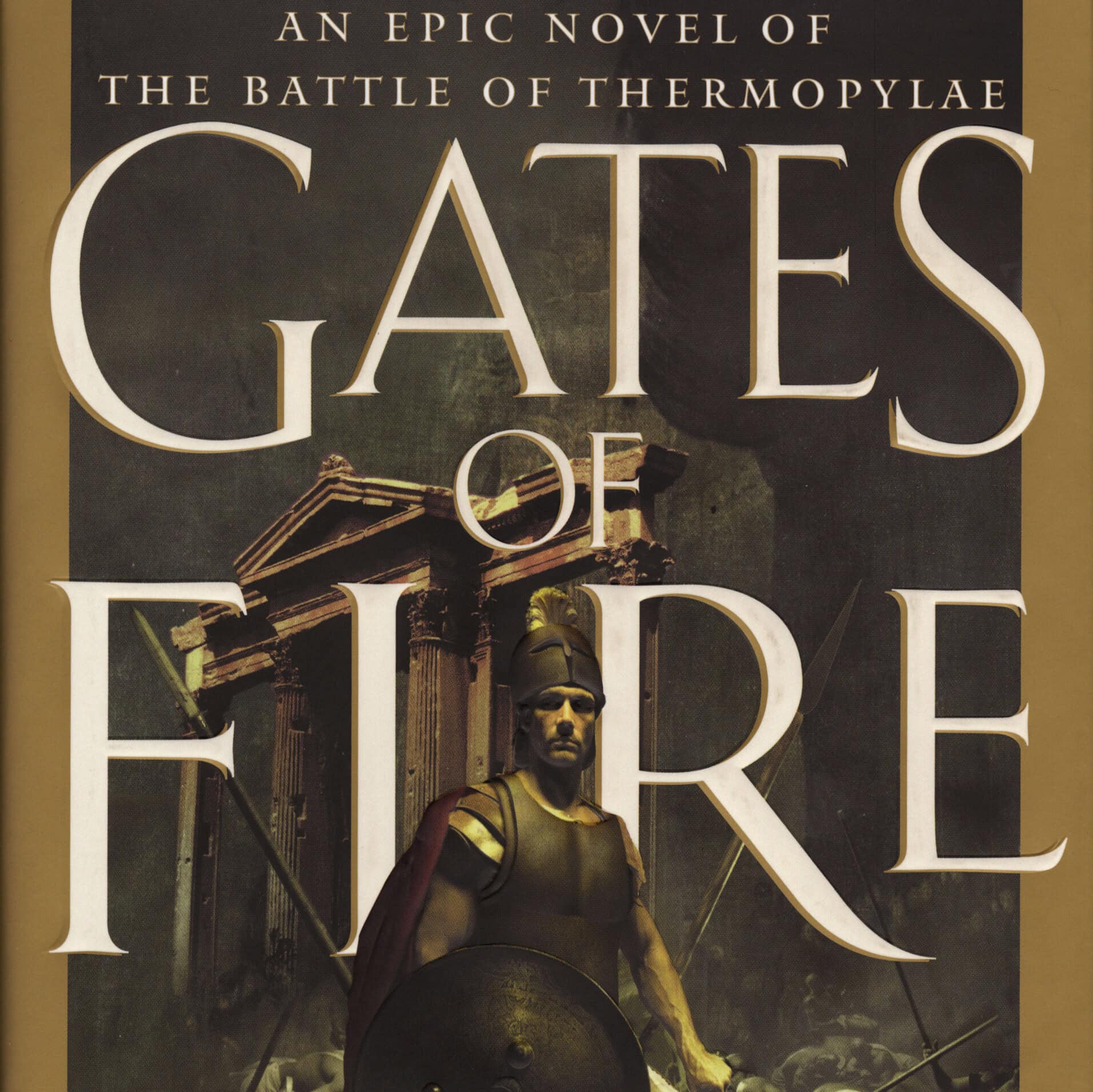
The novel Gates of Fire is a fictionalized retelling of the Battle of Thermopylae (480 BC) where 300 Spartans and their allies made a legendary stand against the massive Persian army of King Xerxes.
The story is narrated by Xeones, a Greek survivor who becomes a squire to the Spartans, and after their defeat is taken captive by the Persians. With his captors as an audience, he recounts the tale of the Spartans’ preparations, their culture, and the battle itself. Through his life’s journey, the reader learns of not just King Leonidas and Xerxes, but also of ordinary soldiers, their lives, family, and the community and culture that created faithful warriors willing to make the ultimate sacrifice to protect their polis.
I might recommend this book to my boys as older teenagers. Its content is mature as war is a central plot point, and there is frank, but not graphic, discussion of themes such as marital customs and brothels and prostitution. But there is great value in the ethos of honor, duty, and courage in the face of terror.
I particularly like the prominent role women played in the text. As King Leonidas must select the 300 Spartans who will march with him to Thermopylae, he does not simply pick the strongest or most capable warriors. He deliberately selects men based on the strength of their wives and mothers. His reasoning is that this is a suicide mission wherein nearly all will die. The widows and mothers will be left behind in Sparta to support their families and carry on. The entire city will have its morale shaped by how these women handle and bear their loss. Therefore, only the strongest, most steadfast, and proud women will have their spouses and sons sent into battle so that they may set an example for the polis. They will keep Sparta unified rather than broken by grief.
The narrator Xeones is a archetype for the power of fate or destiny. As a boy, his city is destroyed, his family slaughtered, and he survives almost by accident, suggesting he is spared by fate. His youth is marked by exile and hardship, shaping him for the path that leads to Sparta. Though not Spartan by birth, his life bends toward serving them, as though destiny placed him in their orbit to record their story. At Thermopylae, almost all die — but Xeones survives, grievously wounded, to be taken before Xerxes. This survival isn’t luck; it feels fated, so that he can bear witness.
Here are the key themes:
1. Honor and Sacrifice
The Spartans’ readiness to die for their city and comrades is central. Their deaths are not seen as tragedy alone, but as the ultimate fulfillment of their duty. Leonidas in particular embodies the ideal of leadership by sacrifice.
2. Courage and Fear
Pressfield portrays courage not as the absence of fear, but as action in spite of it. Characters openly discuss terror, pain, and doubt yet still choose to fight.
3. Discipline and Training
Spartan society is depicted as harsh, raising children from youth to withstand hardship. The agoge (training system) forms warriors who value the group above the self. This relentless preparation is shown as the source of their battlefield prowess.
4. Comradeship and Brotherhood
The bond among the warriors is a constant theme. Loyalty to one another is as important as loyalty to the state. Pressfield highlights the love and trust between soldiers as the glue that holds the phalanx together.
5. The Role of Women
Though Sparta was male-dominated, Spartan women play a vital role. They are portrayed as strong, proud, and often sterner than the men. They remind the warriors that their deaths would bring honor, not shame, to their families.
6. Leadership
King Leonidas represents the ideal leader: he leads by example, shares the hardships of his men, and embraces sacrifice. His decisions emphasize that leadership is service, not privilege.
7. The Nature of War
The book doesn’t romanticize combat—it shows its horror, blood, and exhaustion. Yet it also depicts war as a crucible that reveals character and values.
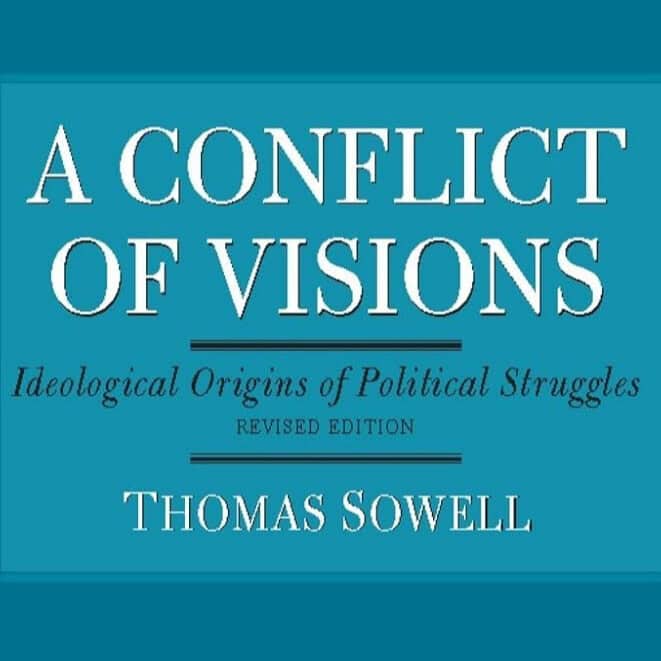
Thomas Sowell describes an inherent and longstanding conflict between competing vision of the world. Sowell drives down to the deepest levels of abstraction to trace the origins of political difference to the fundamental views of the nature of humanity, the world, and ethics. The book explains how the two political parties in the US so reliably find themselves taking opposing views on the problems and corresponding solutions to issues plaguing the world. Sowell’s assertion is that this reliable difference is due to deeply held, though often implicit, fundamental premises about the world in its description and operation. This bifurcation is between those who see the world as unconstrained and those who hold a constrained view of the world. The book looks at this dichotomy of the constrained versus the unconstrained vision.
These visions or worldviews are like maps that compress the complexity of the world into a easily tractable landscape of the major features of reality. The political conflict stems from fundamentally opposed maps and visions of reality. I find his framework both compelling and full of explanatory power to illuminate current struggles and disagreements.
Constrained
Nature of Man
Man is inherently limited
Man is born brutish and selfish and fallen, society may use his selfish motives to restrain anti-social behavior
Primarily concerned with man’s intentions and motivations
Nature of World
Highly concerned with accurately describing and dealing with the world as it is
World is infinitely complex such that it is impossible or counterproductive to try to directly achieve ends
The world can only be managed via trade-offs
Since all actions are tradeoffs, best we can do is set up fair rules and process
Nature of Government
Checks and balances because no one can be trusted with power
The exception that demands special explanation is poverty, war, & crime
Carefully balance trade-offs and maintain fair rules so that individuals may have opportunity to prosper
Unconstrained
Nature of Man
Man is unlimited, untapped potential
Man is born pure and virtuous, corrupted only by institutions and culture. Each person is a blank slate that is subsequently corrupted
Primarily concerned with outward actions and incentives
Nature of World
Primarily motivated with concern for the world as it ought to be
World is infinitely malleable to human intention and man’s objectives. Any deficiency is the result of evil intention
The world must achieve desirable solutions
The right thing is to achieve fair outcomes and objectives
Nature of Government
Empower of moral & intellectual superiors to steer society
The exception that demands special explanation is wealth, peace, & civility
Banish the evil that is localized in individuals and institutions so that the possible utopia may prevail upon the land
Normally one could neatly fit many progressive or Democrat politicians into the unconstrained vision and place most conservative or Republican politicians into the constrained vision. However, President Trump violates many dimensions of this dichotomy. His actions in office seem to tilt much more to the unconstrained vision than the typical republican politician. He is not laissez faire and free market oriented. He exhibits aspects of a “strong man” whom his follower trust with power to make the world better. He does not deal in trade-offs so much as grand solutions. This can be understood in terms of his populist principles and repudiation of traditional conservative or neoconservative ideals.
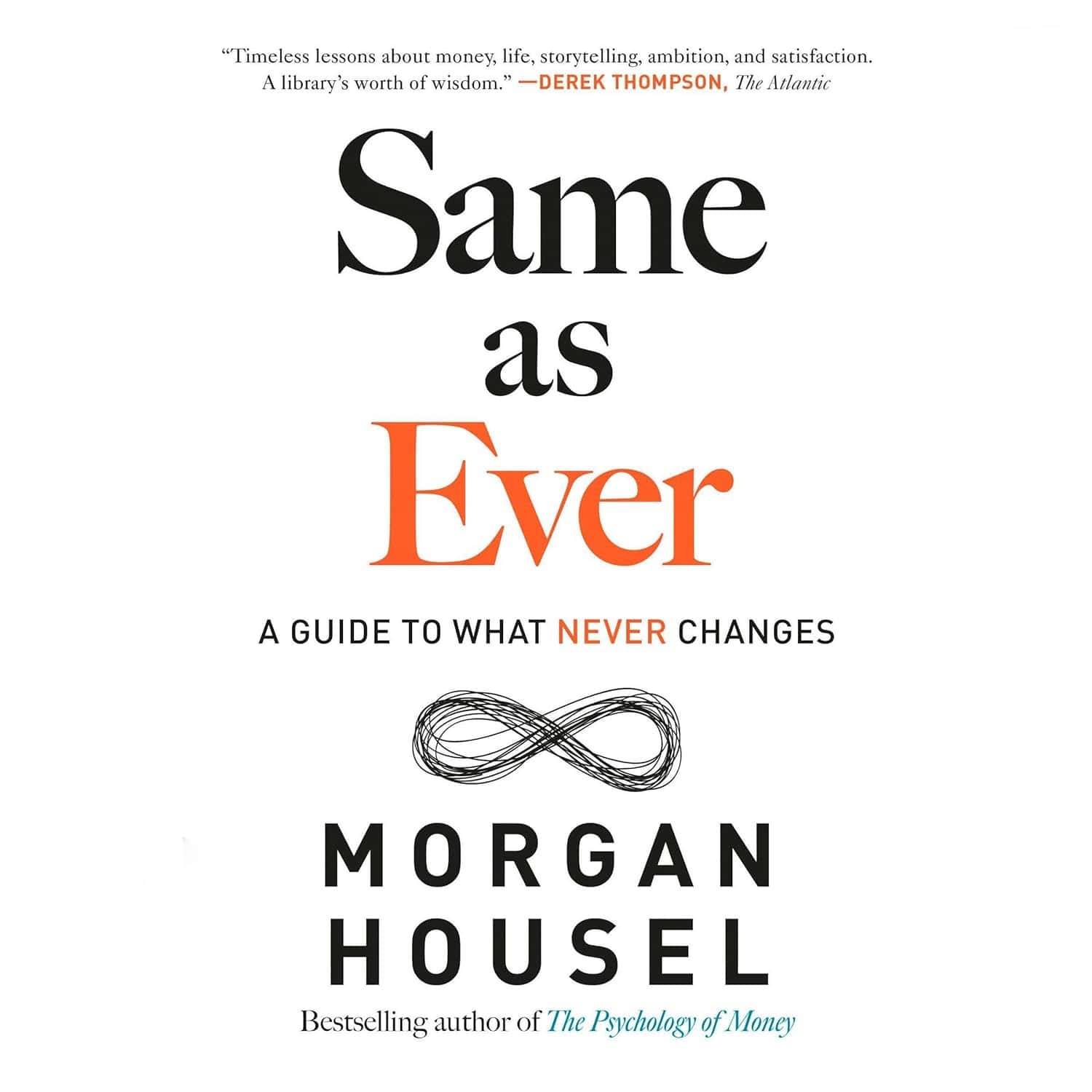
Morgan Housel is a powerhouse of practical financial wisdom. He conveys his ideas through memorable stories and historical examples. I loved his first book The Psychology of Money, and his follow-up, Same as Ever, delivers the same level of impact and clarity on finance, risk, and prudence. The structure of the book is a series of standalone chapters introducing a key concept along with stories to illustrate and drive home the point. Housel is a master storyteller. What follows is my list of key lessons.
Unpredictability is predictable: small nudges and chance events can dramatically alter the course of history. If this has always been true in hindsight, we should assume the same phenomenon is unfolding around us every day.
Risk = what remains after you have thought of everything: risk cannot be eliminated, only expected and managed. If you had to predict the biggest news story of the coming year on New Years Eve, you would almost always miss the biggest event of the next 12 months. Who predicted the arrival of COVID, the conflict in Ukraine, 9/11, or the Great Depression? No one. Invest in preparedness, not prediction.
Happiness = Reality – Expectations: if reality beats what you expected for a given circumstance, you will be happy. If you received less than you expect, you are sad and disappointed. Live in gratitude. Relish the simple beauty of a warm meal, socks on your feet, or a comfortable bed.
Biz “Greats” are comprised of a constellation of traits: the wealthiest business leaders achieved outsized success by being outliers in a constellation of traits. You cannot aspire to their wealth without also accepting the entirety of their lives. Yes, you want Bill Gate’s or Elon Musk’s wealth. Would you forgo vacations for over a decade, as Gates did, or live on a factory floor and risk insolvency, as Musk has?
Certainty > Accuracy: people generally are more driven for a desire of perceived certainty than for true accuracy. Statistics and probabilities are some of the accurate language to describe the current and future realities of many situations. Most people prefer the safety of a simple yes-or-no answer. Yet that certainty is an illusion.
Anecdotes > Statistics: Humans love a good story. People are reluctant to let data get in the way of a good story. In politics the most salient story wins; it does not matter if the facts are not in its favor. It just takes one horrific self-driving car accident to dissuade millions of the technology. This is true even if factually the statistical picture is one where autonomous vehicles are orders of magnitude more safe.
Calm breeds chaos: When times are stable, people take risks. Those risks eventually trigger a tail event that topples stability. Fear then breeds conservatism, which restores stability — until people feel safe enough to take risks again…. and so it goes. This can explain much of the cyclicality seen in markets and economies.
Stairs up, elevator down: good news and progress goes slowly, imperceptibly, and takes time to notice. Bad news is immediate, felt, and widely known. Years of progress can be erased in days. Good news is generally things that didn’t happen. Progress is usually quiet; setbacks are loud.
Optimism/Pessimism – dual virtues: save like a pessimist; invest like an optimist. Plan like a pessimist; dream like an optimist.
Embrace the suck: Most worthwhile things have a known cost. Learn to enjoy paying that price. Charlie Munger said. “The safest way to get what you want is to try to deserve what you want.” Pay the price. True in relationships, careers, and finances.
Competitive advantages have a shelf life: No competitive edge lasts forever. Exploit it while it does.
Incentives = most powerful force in the world: understand the relevant incentives, and you can predict the future. Incentives are the most powerful force in the world. People reliably act according to the incentives in front of them.
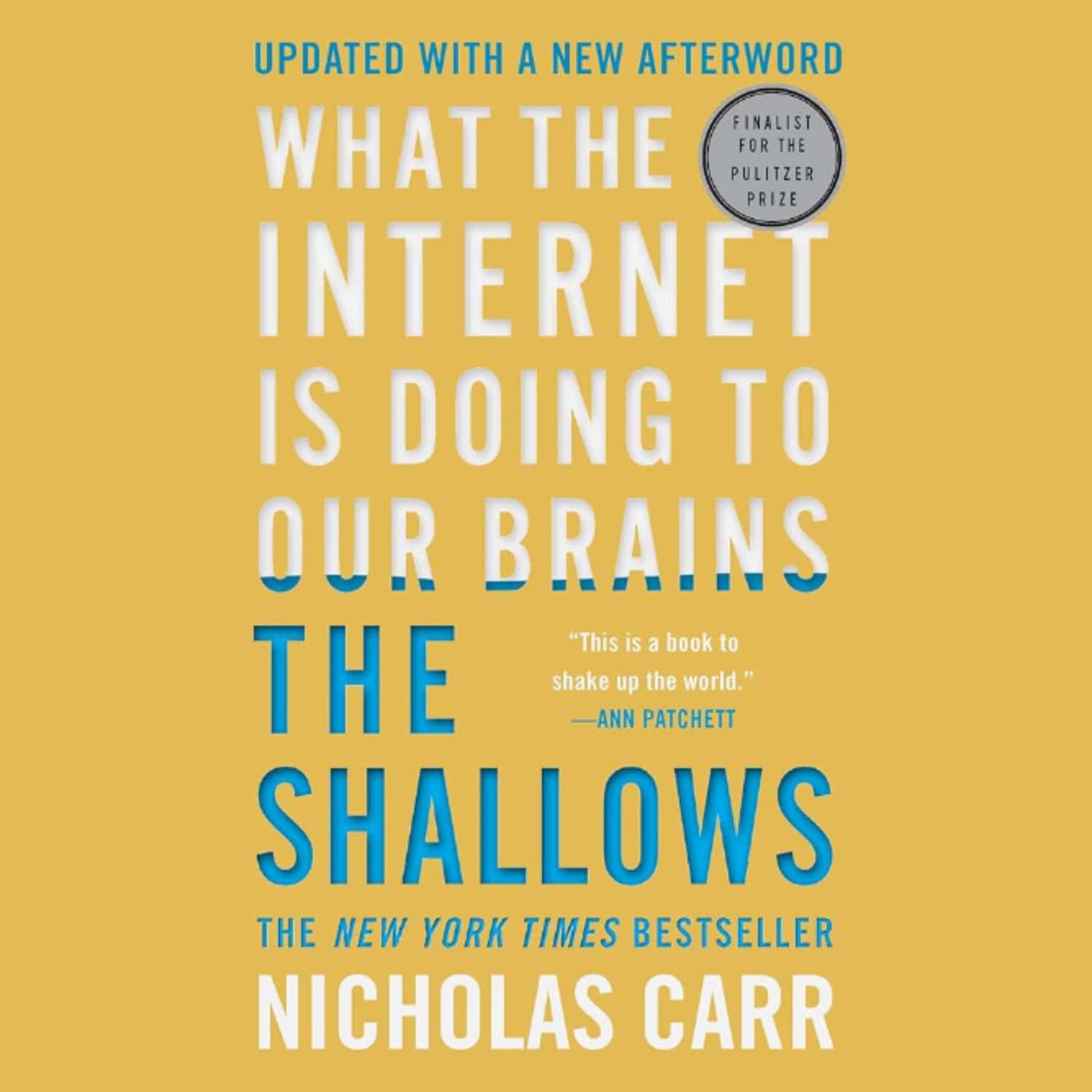
Nicholas Carr’s The Shallows explores one fundamental truth: the brain does not merely process incoming stimuli — it changes dynamically in response to how it is stimulated and engaged. In the modern world, our brains constantly interact with technology (computers, email, apps) and entertainment (streaming, social media, podcasts) in ways radically different from the environment and tools of centuries, or millennia, past. The result is a different brain than that of our grandparents, great-grandparents, and generations before them.
Drawing on research from neuroscience, psychology, and sociology, Carr examines the effects of what he calls “the shallows” — the vast ocean of digital information and entertainment that surrounds us, endlessly accessible yet often lacking real depth.
Adaptation
The human brain is remarkably flexible. While its overall structure includes specialized regions for processing, its neural wiring is highly plastic. Neurons connect, prune, and reconfigure themselves in response to repeated experiences. This plasticity allows for extraordinary variation in human ability, whether in playing tennis, improvising jazz, or watching a film.
Our brains adapt to the tools we use and the experiences we undertake. Consider the differences between typing and handwriting, which extend far beyond words per minute, or the variation in comprehension between reading a printed book and reading the same material on a smartphone.
Carr situates today’s technological shifts in a long history of disruptive tools, from the printing press to the mass proliferation of books. Just as those earlier innovations reshaped cognition, today’s flood of short-form content — email alerts, app notifications, videos measured in seconds, tweets and soundbites — is rewiring us in profound ways.
The research and anecdotes are sobering. Many educators report that the rising generation is losing the ability to read a book from beginning to end.
“I can’t get my students to read whole books anymore.”
The Vanishing Skill of Deep Reading
Reading a book is not merely a pastime; it is a practice. To devote one’s mind wholly to the words on the page — and to the ideas hidden between the lines — requires discipline and focus. For many in Generation Z, those mental pathways have not been reinforced. Instead, their habits have been shaped by an environment of constant stimulation, where information arrives in attention-grabbing, bite-sized packets.
This steady diet of nuggets creates the illusion of learning without the depth of understanding. The most seductive products give us the feeling of improvement without requiring the effort of true mastery. Listening to a podcast on a niche subject may produce a momentary sense of enrichment, yet the engagement is often so shallow that little knowledge is retained or applied.
As neuroscientist Michael Merzenich observed:
“When culture drives changes in the ways that we engage our brains, it creates DIFFERENT brains. [It is hard to imagine life without the Internet and online tools like Google.] THEIR HEAVY USE HAS NEUROLOGICAL CONSEQUENCES.”
Complement or Substitute?
At the root of the question is whether the tools of the mind serve as complements or substitutes. Do our knowledge tools augment and enhance critical thinking, creativity, concentration, and perception? Or do they displace these functions, outsourcing them in ways that promote mental lethargy and the atrophy of essential human abilities?
Steve Jobs once reasoned by analogy that the computer was a bicycle for the mind, a tool that amplified our natural capabilities with far greater efficiency.
“We humans are tool builders, and we can fashion tools that amplify these inherent abilities that we have to spectacular magnitudes.”
This is the tension we must grapple with. Do modern technological tools truly amplify our abilities, or do they replace them? And if they replace them, how do our brains adapt to the loss of functions that once belonged to us? These questions can no longer be ignored in the era of AI tools and large language models like ChatGPT.
But is the bicycle still the right analogy? Riding a bicycle still requires effort — exertion of the legs, strengthening of the body, engagement of the cardiovascular system. The tool extends us, but it does not free us from the work itself. By contrast, what if modern technologies are more like riding in an autonomous car? The passenger expends no physical or mental energy, and the body does not adapt or grow stronger. Indeed, it may regress into a less capable state.
One compelling example is the use of GPS.
GPS vs Brain
The hippocampus, especially the posterior hippocampus, is the region of the brain especially involved in navigation and spacial localization. There is a famous study conduct on London taxi drivers that shows licensed drivers who spent years driving and learning the complex layout of the London streets had enlarged posterior hippocampi compared to control subjects. Their brains had adapted to the mentally strenuous task by devoting a greater brain volume and density to this critical area. We have a generation of drivers who have always used turn by turn instructions from GPS devices or smartphones with GPS-enabled apps. This cohort has diminished structural volume in the hippocampus due to reduced engagement of this area. The “outsourcing” of navigation may attenuate the hippocampal benefits that come from navigation and wayfinding.
One might assume that diminished navigation skills are of little consequence. Yet I would argue that physical maps are deeply connected to conceptual ones. Since their invention, maps have helped us make sense not only of geography but also of abstract relationships. These “mental maps” and the spatial structuring of ideas have often served as powerful engines of insight and discovery. For example, Richard Feynman’s eponymous Feynman diagrams provided a far more intuitive way to visualize subatomic interactions than Julian Schwinger’s purely mathematical derivations of quantum electrodynamics.
Reflection
This fascinating book has made me reflect many times on how deeply I wish to engage with the shallows. I deleted Facebook and got off Instagram. I am active on X (formerly Twitter) but perceive enough maladaptive effects that I am considering how I wish to engage with this platform going forward. Then the big question is how to use LLMs and AI tools to augment and complement my own thinking and mental activities, not to merely outsource them and allow my God-given abilities to whither. This must be a conscious and probably oft-negotiated decision. I must never forget that my engagement with technology and media is in constant feedback bi-directionally with my brain. We are changed by the technology and media we consume. So consume carefully.
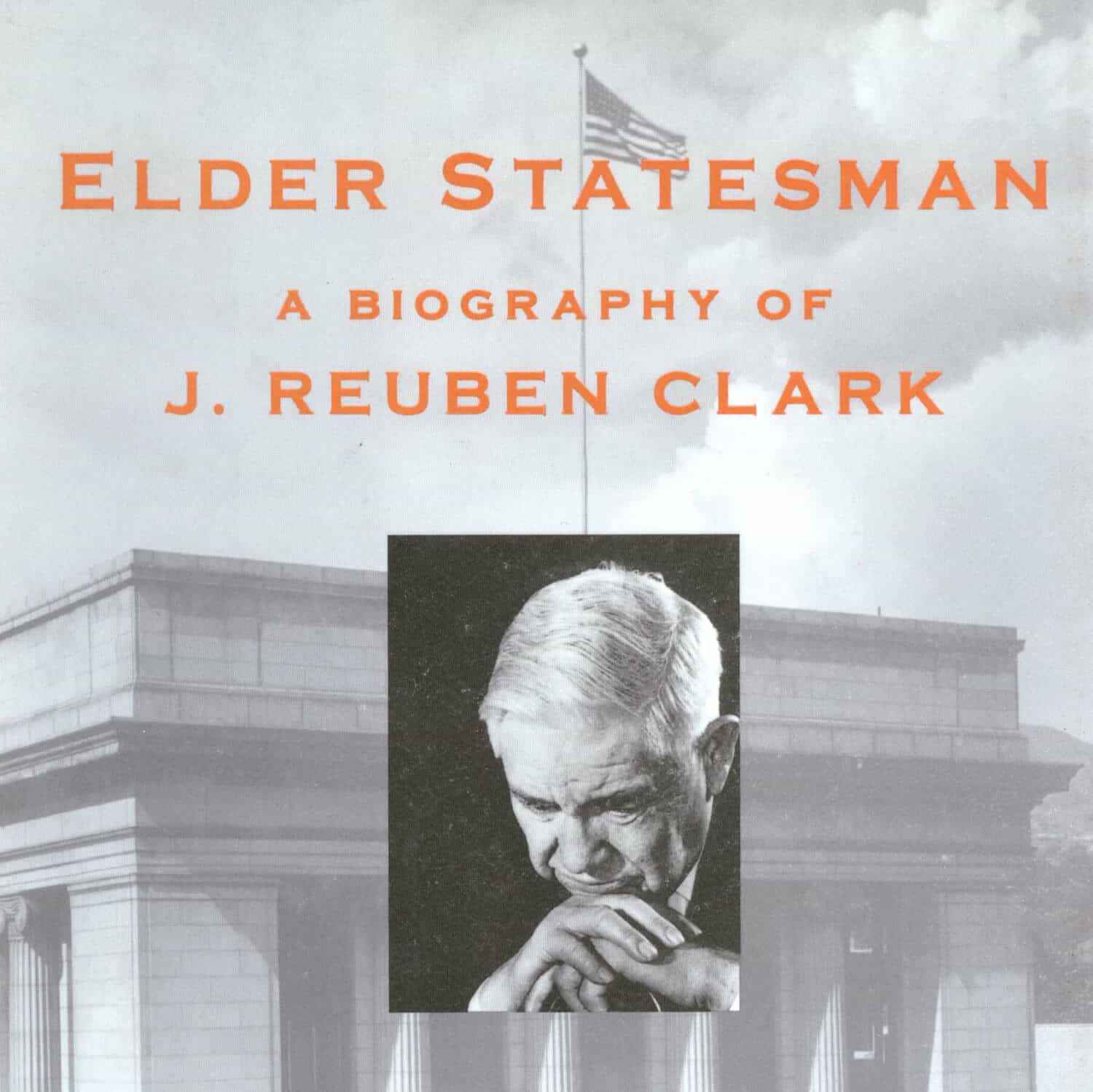
J Reuben Clark (JRC) led a fascinating life and left an indelible mark on The Church of Jesus Christ of Latter-Day Saints. This biography, nearly 600 page long, is impressively researched; the final 200 pages consist of endnotes with sources, quotations, and primary-source context supporting the narrative in the first two-thirds.
Path to Church leadership
Perhaps the most unusual aspect of his life was the trajectory that ultimately led him to the highest presiding council of the Church — the First Presidency. JRC was not called to a position of authority until the age of 62. He had never served as a bishop, stake president, or seventy. Yet the prophet called him to serve as the Second Counselor in the First Presidency, where he would serve under three presidents: Heber J. Grant, George Albert Smith, and David O. McKay.
Although not experienced in presiding authority or church leadership, his call to serve was from God. JRC had accrued other experiences that would prove pivotal to shaping the church as it emerged from relative obscurity and became a world-wide faith. During his tenure, the Church would grow and establish itself throughout the globe. His talents and expertise were in the areas of law, politics, governance, and administration. He would use these God-given talents and experiences to shape the church with his unique perspective. He had served as the US Under Secretary of State and US Ambassador to Mexico. He was trained in law and had an aptitude for study and research. He served the Lord in the same style he had served his country. He was known for studying church matters deeply, coming to meetings and councils with prepared briefs outlining relevant background, doctrine, history, and delineating his prayerfully considered position. This rigor would outlast his service.
Abrahamic sacrifice
Church service is rarely comfortable and often demands a submission to the Lord. JRC a talented and ambitious public servant who envisioned serving in the highest echelons of government as a state senator or possibly a Vice President. At age 55, he was forced to reckon with the tension between worldly ambition and Christlike service. It was no easy decision, but he felt inspired to lay aside those ambitions and be wholly available to the Lord. In 1925, he accepted a call to the Young Men’s Mutual Improvement Association general board. As he wrote to his close friend Fred Morris Dearing:
“I thoroughly enjoy living out here in the desert wilderness and while I miss the fleshpots of Egypt and sometimes I am in a sad need of a helping from them, I am still quite willing to forgo the mere lucre for the sake of the real life which I am able to live.”
I believe our Heavenly Father has a sense of humor and isn’t afraid to subvert expectations. Despite striving and falling short of his ambitions and leaving them at his peak of influence and experience, after being called to serve in the church, there came many opportunities for position, power, and prestige. These would be thrust upon him. He would go on to serve as:
1928-29 7th United States Under Secretary of State
1930–33 Ambassador Extraordinary and Plenipotentiary of the United States to Mexico
1933 Delegate of the United States to the Seventh International Conference of American States (Pan-American Conference), Montevideo, Uruguay
1933 Elected director, Equitable Life Assurance Society of the United States, New York City
1936 United States representative on Committee for the Study of International Loan Contracts (League of Nations)
1950 Elected member, board of trustees, the Roosevelt Memorial Association
His life is a testament to the scripture, “Wherefore, dispute not because ye see not, for ye receive no witness until after the trial of your faith.”
Legacy
Very little can be wholly attributed to any single individual; however, here is a list of many of the lasting marks JRC left upon The Church of Jesus Christ of Latter-Day Saints:
JRC was a staunch advocate for an official church policy of political neutrality. The pulpit is not the place for the church or its leader to opine on political parties. He argued that General Authorities should not simultaneously serve as high-ranking government officials, as in the case of Apostle and U.S. Senator Reed Smoot.
JRC in principle started Church Correlation whereby official church materials and publications would be thoroughly reviewed and approved to keep the doctrine pure. He championed the establishment of the “Literature Committee” in 1940 and the subsequent “Committee on Publications” in 1944. These committees would help set and maintain standards for publication of official church materials for use in church organizations for instruction.
JRC dealt with the apostates who were continuing to practice polygamy. He authored sharp and unequivocal denunciation of the practice on behalf of the First Presidency in 1933.
JRC was critical in architecting and establishing the Church’s Welfare Program. In the Great Depression and thereafter, JRC advocated for seeking to help our brothers and sisters before they turned to the government for assistance. This help was predicated on a program of service, labor, work coordination, and improvement. The church established farms and canneries with the dual mandate of providing work opportunities to beneficiaries and directing providing material aid to those in need.
What is old is new
One of history’s great lessons is that the tensions and conflicts of human experience endure across time. Reading about the political polarization of the 1930s, I could not help but think of the United States in 2025. Some Church leaders struggled to understand how faithful Latter-day Saints could support Franklin D. Roosevelt, whom they regarded as a radical. Yet FDR carried Utah with more than 60% of the vote. His programs and expansion of the federal government were seen as subversive to the Constitution and core American principles of governance.
Regardless of personal politics, I think all can agree that today we struggle to empathize and understand good faith members of the opposing political party. It is hard to provide a charitable interpretation of their (obviously) horrendous actions and motives. These were substantial events and topics during JRC church service.
Additionally, JRC was opposed to American intervention in the European conflict that would be known as WWII. I see similar threads to those who oppose American support and equipment being sent and used in Ukraine and Israel. Your personal politics is not the important point, but rather that these are thorny issues that good people can (and WILL!) have disagreements about. We must be able to preserve a respect and decency to our political opponents. At a fundamental level, we share common attributes of love and identity that finds its expression in often diametrically opposed actions.